Technology
One platform, from sensor to response
Tekmara combines sensor nodes, edge computing and renewable-powered deployment with autonomous vehicles, so its systems can sense, analyze and act with little human intervention and without relying on centralized connectivity.
Monitoring nodes
AI-enabled monitoring nodes and sensors observe water conditions, marine life and vessel activity around the clock.
Edge computing
Data is processed where it is collected, so problems such as pollution sources or falling oxygen are flagged in real time.
Wireless data
Data is stored and transmitted wirelessly, without a cable to shore.
Renewable power
Solar, wave and hybrid renewable energy keep systems running through long-duration deployments.
Autonomous vehicles
Autonomous underwater and surface vehicles are charged and coordinated in the field to extend coverage.
Decision support
AI turns readings into alerts and operational awareness, with little human intervention.
AquaGuard
Renewable charging and coordination for autonomous vehicles
AquaGuard is a modular, renewable-powered station that charges and coordinates autonomous underwater and surface vehicles in the field, so they can stay on long-duration missions with less reliance on crewed vessels.
- Solar, wave and hybrid renewable power
- Charging and support for autonomous underwater and surface vehicles
- Edge data transfer and mission coordination
- Modular design for varied marine environments
In April 2026, Tekmara and FIU’s Aquarius Reef Base announced an AI-enabled monitoring node integrated with AquaGuard. Read the announcement (opens in a new tab)

The AquaGuard operator dashboard. Open the interactive demo
Research and development
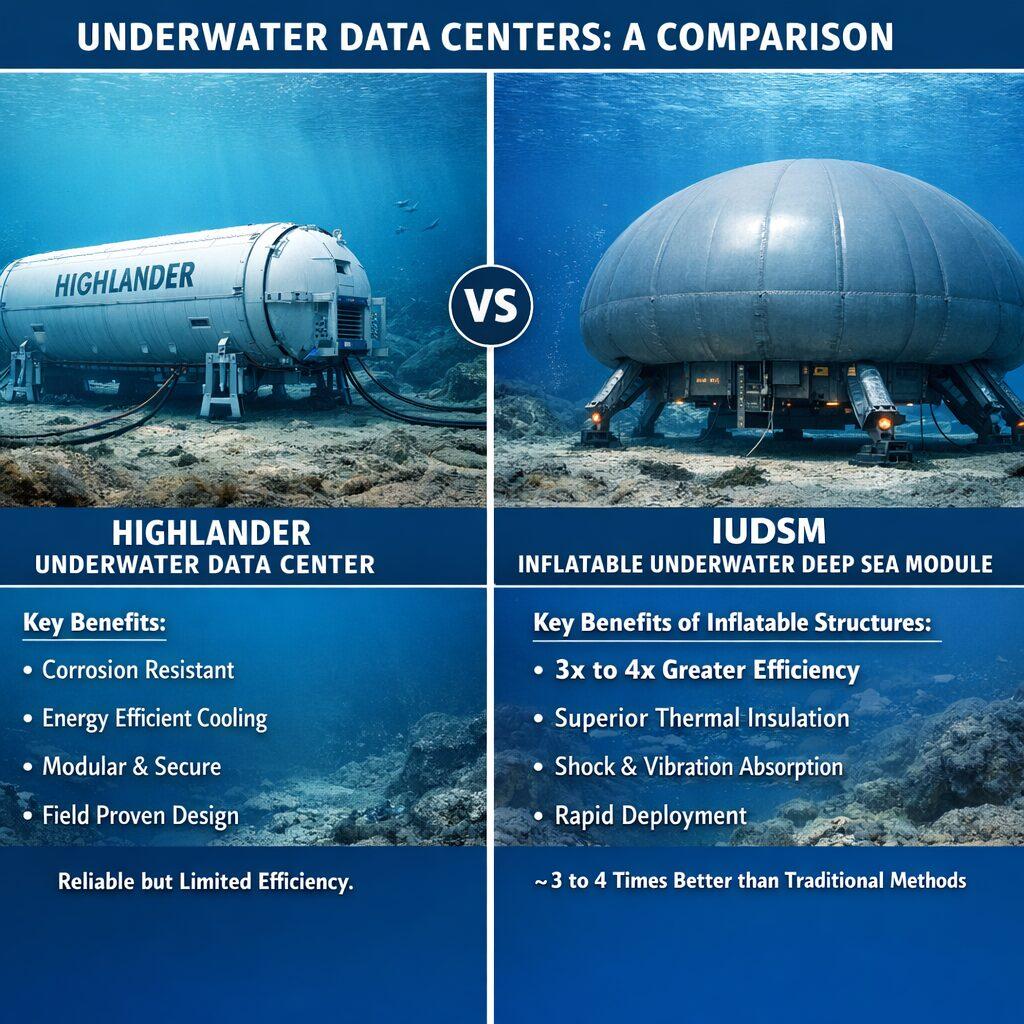
Inflatable Underwater Data Center and Storage Module
Tekmara’s Inflatable Underwater Data Center and Storage Module (IUDSM) represents a next-generation alternative to traditional rigid subsea data centers. While conventional systems are reliable, they are constrained by high costs, complex deployment, and limited efficiency gains. In contrast, inflatable architectures enable faster deployment, improved thermal insulation, and natural shock absorption, while significantly reducing structural and operational overhead.
This approach allows for more scalable, adaptable, and cost-effective subsea infrastructure, positioning Tekmara to unlock higher efficiency and broader deployment potential across ocean-based compute and storage networks.